API 609 — formally titled "Butterfly Valves: Double-Flanged, Lug- and Wafer-Type" — is a product standard developed by the American Petroleum Institute (API) that specifies requirements for butterfly valves intended for on-off and throttling service in pressure class designations from Class 150 through Class 3000 (ASME B16.34).
The standard covers:
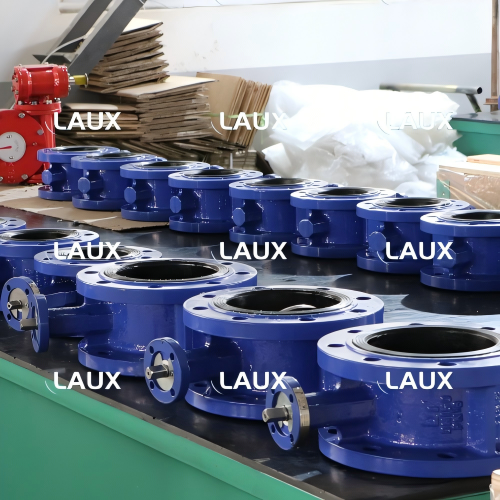
API 609 applies to both metal-seated and soft-seated butterfly valves and is widely accepted in upstream oil and gas production, midstream pipeline transportation, downstream refining, and petrochemical processing facilities.
One of the most important aspects of API 609 is its classification of butterfly valves into three categories based on the disc-to-seat offset design.
| Feature | Description |
| Design | Concentric (zero offset) – disc rotates on the centerline of the valve bore |
| Seat | Resilient (rubber/elastomer) seat, vulcanized or cartridge type |
| Temperature | Low to moderate (typically -20°C to +90°C for EPDM; up to +150°C for Viton) |
| Pressure | Class 150 and Class 300 (most common) |
| Leakage | Bubble-tight shut-off (zero leakage) with resilient seat |
| Typical Sizes | 2" to 48" (DN50 to DN1200) |
| Applications | Water, wastewater, HVAC, fire protection, cooling water, utility services, low-pressure process lines |
Category A valves are the most economical butterfly valve design. They are widely used in utility and general service applications where operating temperatures are moderate and media is non-aggressive.
| Feature | Description |
| Design | Double offset (double eccentric) – disc rotates off-center in two planes |
| Seat | Resilient or polymer seat; PTFE-lined or reinforced polymer for higher temperatures |
| Temperature | Moderate to high (up to +200°C with PTFE seat; up to +260°C with PEEK) |
| Pressure | Class 150 through Class 600 |
| Leakage | Bubble-tight shut-off (zero leakage) with appropriate seat material |
| Typical Sizes | 3" to 60" (DN80 to DN1500) |
| Applications | Refined products, chemical processing, steam, high-temperature water, mild slurry services, pipeline isolation |
| Feature | Description |
| Design | Triple offset (triple eccentric) – conical sealing surface with friction-free cam motion |
| Seat | Metal-to-metal or metal-to-laminate (graphite/PTFE laminate stack) |
| Temperature | High to very high (up to +500°C with metal seat; up to +800°C with special alloys) |
| Pressure | Class 150 through Class 2500+ |
| Leakage | Bubble-tight shut-off (metal seat Class V or VI per FCI 70-2) |
| Typical Sizes | 3" to 72" (DN80 to DN1800) |
| Applications | High-temperature steam, high-pressure gas, cryogenic service, hydrogen, FCCU catalyst lines, severe service |
Category C valves represent the most advanced butterfly valve technology. The friction-free cam action enables metal-to-metal bubble-tight sealing at extremely high temperatures and pressures.
API 609 specifies standardized face-to-face dimensions for butterfly valves, ensuring interchangeability between manufacturers. The dimensions vary by valve category, type, pressure class, and size. The standard references two dimension series:
| Class | Rated Pressure at 100°F (38°C) | Typical Applications |
| Class 150 | 275 psi (19.0 bar) | General utility, cooling water, fire protection, low-pressure process |
| Class 300 | 720 psi (49.6 bar) | Refined products, chemical processing, steam systems |
| Class 600 | 1,440 psi (99.3 bar) | Pipeline isolation, high-pressure gas, oil production |
| Class 900 | 2,160 psi (148.9 bar) | High-pressure refinery, steam injection, gas transmission |
| Class 1500 | 3,600 psi (248.2 bar) | Severe service, high-pressure hydrocarbons, high-temperature steam |
Actual pressure ratings decrease as operating temperature increases. Refer to the manufacturer's pressure-temperature chart for exact values.
| Aspect | API 609 | AWWA C504 | EN 593 |
| Scope | Oil & gas, petrochemical, power | Waterworks, municipal, wastewater | General industrial & water, Europe |
| Pressure Classes | Class 150 to Class 2500+ | Class 25 to Class 300 | PN 2.5 to PN 40 (up to PN 100) |
| Temperature | -196°C to +800°C | Typically -20°C to +80°C | -20°C to +200°C (higher for metal seat) |
| Seat Types | All types (elastomer, polymer, PTFE, metal, laminate) | Elastomer (EPDM, NBR, Hypalon) | Elastomer, polymer, PTFE, metal |
| Primary Markets | North America & Middle East industrial | North American waterworks | European and international markets |
API 609 is the definitive standard for industrial butterfly valves in oil, gas, petrochemical, and power generation sectors. Its three-category classification system provides a clear framework for selecting the appropriate valve design based on service conditions — from simple concentric rubber-seated valves for utility service to advanced triple-offset metal-seated valves for severe high-temperature, high-pressure applications.
At Laux Valve, our concentric butterfly valves are designed to API 609 Category A and AWWA C504 requirements, ensuring compliance with both industrial and waterworks standards. Contact our engineering team for assistance with valve specification and selection.
The latest edition is API 609, 8th Edition, published in February 2022. Always specify "API 609 Latest Edition" in procurement documents.
No. API 609 covers both resilient-seated (elastomer, PTFE) and metal-seated butterfly valves across Categories A, B, and C.
Yes. However, AWWA C504 is generally preferred for municipal waterworks as it includes NSF 61 potable water requirements and water industry-specific dimensions.
Fire-safe testing (per API 607) is optional unless specified in the purchase order. It is typically required for valves handling flammable hydrocarbons.
Request the manufacturer's data sheet, review inspection and test records, verify face-to-face dimensions per API 609 tables, and check for material certifications. API Monogram (Q1) provides independent verification.


